

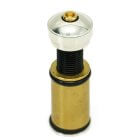
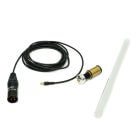
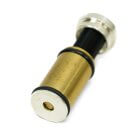
Tomasi MicroCork Flute Pickup System
Amplify your flute — without changing how it sounds, or how you play it.
If you’ve ever fought feedback, wrestled with a clip-on mic, or felt tethered to a mic stand while trying to play a gig, the Tomasi MicroCork solves that. It’s a pickup — not a microphone — built right into your flute’s head joint cork, so you get pure, natural flute tone at any volume, with total freedom to move around the stage.
Why flutists love it
- Total freedom on stage. No mic stand, no boom arm to duck under, no worrying about staying “on mic.” Play, move, dance — the pickup moves with you.
- A bigger, richer sound. Players describe the tone as more open, with fuller low notes and more headroom up top, so soft passages and loud passages both come through clearly.
- Quiet where it should be quiet. Key clicks and finger noise are dramatically reduced compared to clip-on mics, so what the audience hears is your music, not your mechanics.
- Feedback resistance. Because the pickup senses vibration from inside the instrument rather than sound from the air, it’s far less prone to the squeal and howl you get from a mic near a loud stage monitor or PA speaker.
- Weatherproof for real gigging. Built to handle the moisture that comes from, well, playing a wind instrument for a whole set.
No modification to your flute
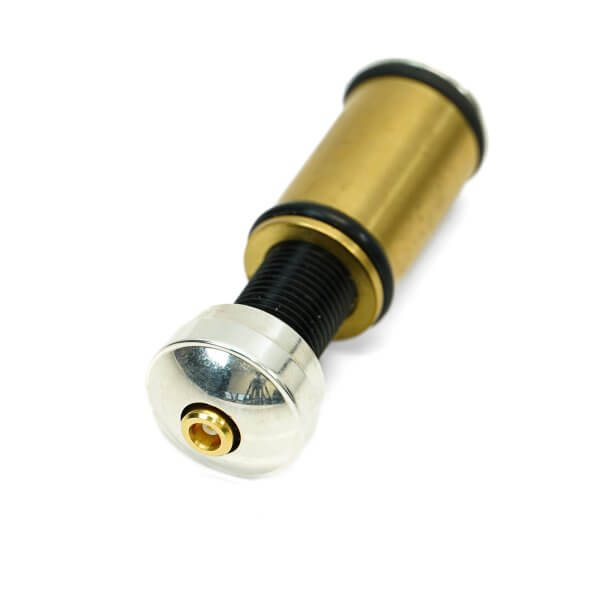
The MicroCork simply replaces the cork and crown that are already inside your head joint — nothing is drilled, glued, or altered. It fits flutes of essentially any size or brand thanks to an adjustable crown and thread system, so if you ever want to go back to a standard cork, you can. It also plays beautifully unplugged, so you don’t need a separate head joint for acoustic gigs.
Finished to match your flute
The crown and cork plate are available in silver or gold plating, so the pickup looks like it belongs on your instrument rather than like an add-on.
How it connects (in plain English)
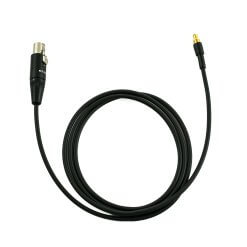
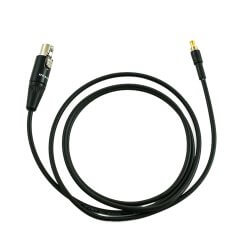
The MicroCork works like a wired guitar pickup: a cable runs from the head joint to a standard microphone cable (XLR), which plugs into a sound system. Because the pickup itself needs a small amount of power to work, that sound system needs to supply what’s called phantom power — a low, safe voltage sent through the same XLR cable. This isn’t anything you need to manage yourself: any mixing board, audio interface, or sound engineer’s system with a “48V” or phantom power switch will supply it automatically. If you’re not sure your gear has this, just ask your sound engineer, or look for a button labeled “+48V” on your mixer or interface.
From there, you have a few options:
- Straight to the PA. Plug into any mixer or powered speaker for live amplification — this is the simplest setup for most gigs.
- Into a computer, tablet, or phone. Connect through an audio interface for recording, looping, or using music software.
- Through effects pedals. Because the signal behaves like an instrument pickup, it works well with guitar- or vocal-style effects pedals for looping, reverb, distortion, or other creative sound-shaping.
The technical details, translated
|
What the spec sheet says
|
What it means for you
|
|---|---|
|
Piezo pickup
|
Senses vibration from the instrument itself, not sound through the air — this is what gives it feedback resistance and freedom of movement.
|
|
Omni-directional
|
Picks up evenly regardless of the pickup’s orientation, so there’s no “sweet spot” you have to aim.
|
|
Frequency response: 50–20,000 Hz
|
Covers the full range of the flute (and beyond), so nothing sounds thin or muffled.
|
|
Requires 48V phantom power via XLR
|
Standard on nearly all mixers, PA systems, and audio interfaces — your sound engineer will already know how to supply it.
|
|
Gold-plated connector and pickup membrane
|
Resists corrosion from moisture, so the connection stays reliable gig after gig.
|
Materials
Brass and silver-plated brass crown and cork plate, with a gold-plated pickup membrane and connector, built with moisture resistance throughout.
You may also like…